1. Alphabet & Pronunciation
1.1. Vowels
2. Similarities to English
2.1. Capitalization
2.2. Negation
2.3. Punctuation & Written Accents
3. Gender & Plural
4. Cardinal Numbers
5. Subject Personal Pronouns
6. Present Indicative Tense I
7. The Articles
8. Interrogative Pronouns & Adjectives
9. Basic Phrases
1. Prepositions
2. Present Indicative Tense II – Irregular Verbs
3. The Verb “To Be”: “Ser” vs. “Estar”
4. Future Tense
5. Possessive Adjectives & Pronouns
6. Demonstrative Adjectives & Pronouns
7. Object Personal Pronouns
8. Relative Pronouns
9. Ordinal Numbers I
10. Times & Seasons
1. “Por” vs. “Para”
2. The Verb “To Know”: “Saber” vs. “Conhecer”
3. Indefinite Adjectives & Pronouns
4. Present Progressive Tense
5. Present Perfect Tense
6. Special Uses of “Haver” & “Ter”
7. Telling Time & Describing Weather
8. Adverbs
9. Directions
1. Degrees of Comparison: Comparatives & Superlatives
2. Past Tense: Preterite vs. Imperfect
3. Conjunctions
4. Reflexive Pronouns & Verbs
5. Time Expressions: Ainda, Já, Acabar, and Desde
6. Present Subjunctive Tense
7. Future Perfect Tense
1. Imperative Mood & Giving Commands
2. Simple Conditional Tense
3. Future Subjunctive Tense
4. Perfect Subjunctive Tense
5. Imperfect Subjunctive Tense
6. Past & Conditional Progressive Tenses
7. Interjections
1. Ordinal Numbers II
2. “Would/Should/Could Have …”
3. Pluperfect Indicative Tense
4. Pluperfect Subjunctive Tense
5.”Although” & “Despite”
6. Passive Voice & Impersonal “Se”
7. Diminutives & Augmentatives
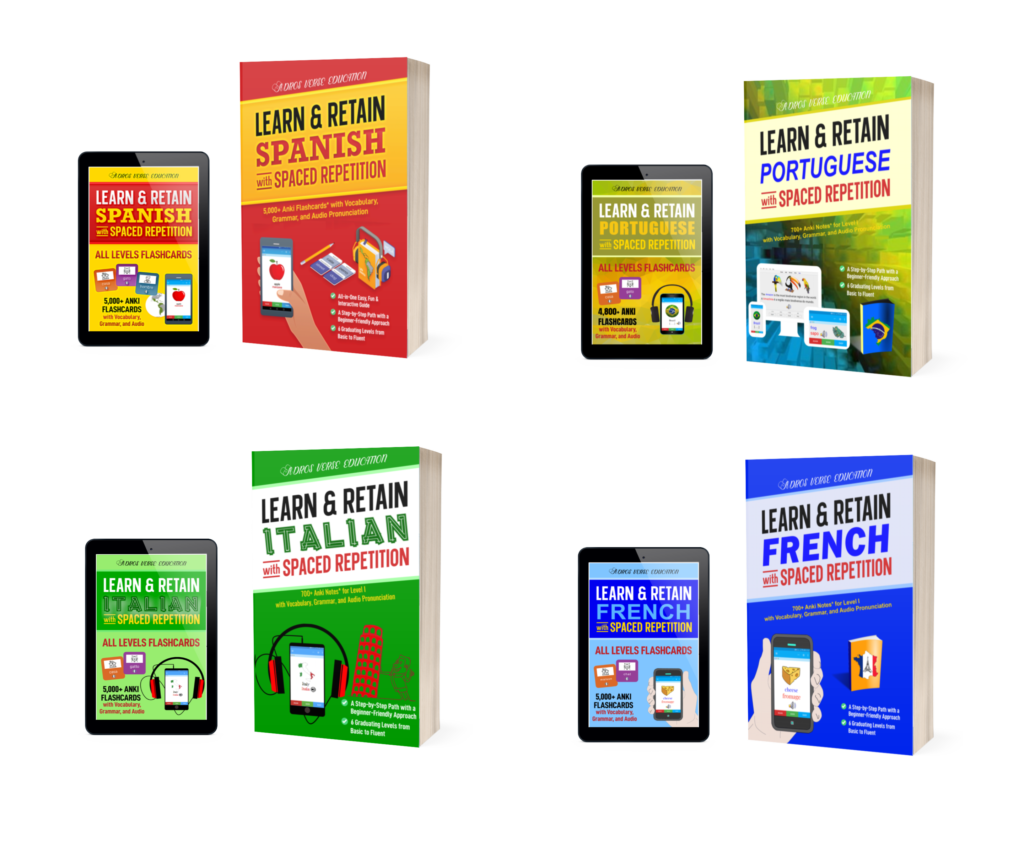
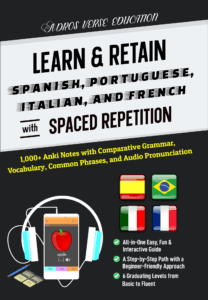
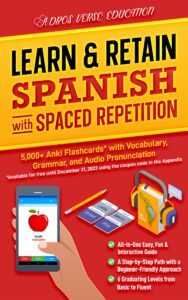




In Portuguese, interjections are exclamation words or expressions that usually represent feelings like surprise or anger. Interjections are often followed by an exclamation mark in Portuguese.
Here is a list of some of the most common interjections in Portuguese:
| Interjection in Portuguese | English Meaning | Examples |
| Que …! | What…! | Que gato lindo! What a beautiful cat! |
| Como …! | How…! | Como ele canta! How he sings! |
| Quanto…! | How much…! | Quanto eu a amo! How much I love her! |
| Oh! | Oh! Ouch! | Oh! Não sabia. Oh! I didn’t know. |
| Por favor! | Please! | Documentos, por favor. Your documents, please. |
| Bravo! | Well done! | Bravo! Jogaram bem. Well done! They played well. |
| Meu Deus! | Oh my God! | Meu Deus! O que aconteceu? Oh my God! What happened? |
| Graças a Deus! | Thank God! | Graças a Deus ele não veio! Thank God he didn’t come! |
| Pelo amor de Deus! | For God’s sake! | O que aconteceu, pelo amor de Deus? What happened, for God’s sake? |
| Claro! | Of course! | -Tem fome? –Claro! -Are you hungry? –Of course! |
| Bom proveito! | Bon appétit! | Aqui está. Bom proveito! Here you go. Bon appétit! |
| Boa sorte! | Good luck! | Até logo. Boa sorte! See you soon. Good luck! |
| Que horror! | How awful! | Foi ruim. Que horror! It was bad. How awful! |
| Que pena! | What a pity! | Nós perdemos. Que pena! We lost. What a pity! |
| Cuidado! | Careful! | Cuidado! Esta escuro. Careful! It’s dark. |
| Olhe! | Look out! | Olhe! É perigoso. Look out! It’s dangerous. |
| Óbvio! | Obviously! | -Você gosta? –Óbvio! -Do you like it? –Obviously! |
| Ei! | Hey! Listen! | Ei! Sinto muito. Hey! I’m sorry. |
Other lessons in Level V: