



In Palestinian-Jordanian Arabic, there are several ways to express possession, e.g., ‘to have (something).’ Each construction carries subtle differences in meaning, which we will examine.
Prepositions Meaning “To Have”
The following prepositions can all be used meaning ‘to have’:
… لَـ (la-)
We have seen in Level II, Lesson 7 that the preposition … لَـ (la-) can mean ‘to,’ ‘for,’ ‘of,’ or ‘into.’
In many contexts, it can also mean ‘to have.’ Consider the following example:
| .لَــلْــبِــيــت بَــاب كْــبِــيْــر la-l-beyt bāb (i) kbīr The house has a large door. Lit. ‘To the house, a large door.’ |
The sentence in the example above can be rewritten as follows:
| .اِلْــبِــيــت إِلُــه بَــاب كْــبِــيْــر il-beyt ’iluh bāb (i) kbīr The house has a large door. Lit. ‘The house, to it, a large door.’ |
This construction is more common in daily Palestinian-Jordanian Arabic. As we have seen in Level II, Lesson 7, the preposition … لَـ (la-) is preceded by إِ (’i) in all gender and number cases when suffixed by an attached pronoun.
| Singular | Plural | |
| 1st person (m/f) | إِلِــيْ ’ili | إِلْــنَــا ’ilna |
| 2nd person masculine | إِلَــك ’ilak | إِلْــكُــم ’ilkum |
| 2nd person feminine | إِلِــك ’ilik | إِلْــكِــن ’ilkin |
| 3rd person masculine | إِلُــه ’iluh | إِلْــهُــم ’ilhum |
| 3rd person feminine | إِلْــهَــا ’ilha | إِلْــهِــن ’ilhin |
In general, the preposition … لَـ (la-) indicates inalienable (or obligatory) possession, that is, an ownership that cannot be separated from its possessor. Consider the difference between ‘my book’ and ‘my foot.’ You may dispose of, gift, or sell your book, but you cannot do the same with your foot. Thus, we say that ‘my foot’ describes an inalienable possession. For example:
| .مَــا فِــيْ حَــيْــوَان إِلُــه ثَــلَاث اِجْــرِيــن mā fi ḥaywān ’iluh thalāth ijreyn There is no animal that has three legs. |
Arabic is one of the languages that makes this distinction.
In Palestinian-Jordanian Arabic, in addition to inalienable possession, we use … لَـ (la-) to refer to family, friends, social connections, rights, desires, properties, and abstract concepts.
Here are some examples of possessions expressed using the preposition … لَـ (la-):
| .إِلِــيْ أَخ وأُخْــتِــيــن ’ili ’akh u-’ukhteyn I have a brother and two sisters. |
| .إِلُــه صْــحَــاب كْــثِــيْــر ’iluh ṣḥāb (i) kthīr He has many friends. |
| .مَــا إِلَــك دَخَـــل mā ’ilak dakhal You have no business (or involvement) in this. |
| .إِلْــهَــا مَــعِــك دِيـــن ’ilha ma‘ik deyn You owe her a debt. Lit. She has a debt with you. |
| .مَــا إِلْــنَــا نِــفْــس نُـــوكِـــل mā ’ilna nif(i)s nowkil We have no desire to eat. |
| .كَــلَامُـــه إِلُــه أَكْــثَــر مِــن مَــعْــنَــى kalāmuh ’iluh ’akthar min ma‘na His speech has more than one meaning. |
عِــنْــد (‘ind)
The preposition عِــنْــد (‘ind) is more general and often indicates alienable (transferable or non-obligatory) possession.
In Palestinian-Jordanian Arabic, we use عِــنْــد (‘ind) to refer to family, friends, social connections, scheduled events, ideas, skills, knowledge, and temporary conditions, such as pain or illness.
Note that sometimes there is an overlap between the prepositions … لَـ (la-) and عِــنْــد (‘ind) when expressing possession. For example, both can refer to family, friends, and social connections.
Here are some examples of possessions expressed using the preposition عِــنْــد (‘ind):
| .عِــنْــدِيْ أَخ وأُخْــتِــيــن ‘indi ’akh u-’ukhteyn I have a brother and two sisters. |
| .عِــنْــدُه صْــحَــاب كْــثِــيْــر ‘induh ṣḥāb (i) kthīr He has many friends. |
| .عِــنْــدُه بِــيــت وسَــيَّــارَة ومَــصَــارِي ‘induh beyt u-sayyārah w-maṣāri He has a house, a car, and money. |
| عِــنْــدَك وَقْــت اِلْــيُــوم؟ ‘indak waqt il-yowm Do you have time today? |
| .مَـــا عِــنْــدْنَــا† فِــكْــرَة mā ‘indna fikrah We have no idea. |
| .عِــنْــدِيْ وَجَـــع بِــبَــطْــنِــيْ ‘indi waja‘ bi-baṭni I have pain in my stomach. |
| .عِــنْــدْهُــم خِــبْــرَة بِــالْــمَــوْضُــوْع ‘ind-hum khibrah bi-l-mawḍū‘ They have experience with the subject. |
† عِــنْــدْنَــا (‘indna) is commonly shortened in speech to عِــنَّــا (‘inna).
As we will see in Lesson 4 of this level, the preposition عِــنْــد (‘ind) can also serve as an adverb of place or time. For example:
| عِــنْــد الْــفَــجْــر ‘ind il-faj(i)r at (the) dawn | عِــنْــد اِلْــبَــاب ‘ind il-bāb at the door |
مَــــع (ma‘)
The preposition مَــع (ma‘) ‘with’ is often used to refer to the temporary alienable possession of an object at a specific point in time. For example:
| مَــعَــك سَــيَّــارَة؟ ma‘ak sayyārah Do you have a car? Lit. With you a car? |
In the example above, the addressed male person is simply asked if he has a car with him at the moment. The ownership of the car, whether it is owned, rented, or borrowed from another person, is of little importance.
Here are some examples of possessions expressed using the preposition مَــع (ma‘) ‘with’:
| .مَــا مَــعِــيْ قَــلَــم mā ma‘i qalam I don’t have a pen. |
| مِــحْــفَــظْــتَــك مَــعَــك؟ miḥfaẓtak ma‘ak Your wallet (is) with you? |
| .مَــا مَــعُــه شَــاحِــن تِــلِــفُــون mā ma‘uh shāḥin tilifown He doesn’t have a phone charger. |
| مَــعْــكُــم مَــصَــارِيْ؟ ma‘kum maṣāri Do you have money? |
Finally, to express possession in the past, place the verb كَــان (kān) ‘he was’ before the possession preposition.
| .مَــا كَـــان إِلْــنَــا نِــفْــس نُـــوكِـــل mā kān ’ilna nif(i)s nowkil We had no desire to eat. |
| .كَـــان عِــنْــدُه صْــحَــاب كْــثِــيْــر kān ‘induh ṣḥāb (i) kthīr He had many friends. |
| .كَـــان مَــعِــيْ قَــلَــم kān ma‘i qalam I had a pen. |
Verbs Meaning “To Own” or “To Possess”
The past verbs مَــلَــك (malak) and اِمْــتَــلَــك (imtalak), derived from the root م – ل – ك (m – l – k), both mean ‘he owned’ and ‘he possessed.’
The two verbs are generally used in a more formal context, often with legal or significant ownership, e.g., land, property, companies, etc.
The two verbs are rarely used in casual conversation, except when referring to significant assets, such as land, real estate, or companies. For example:
| .أَبُــوْي بِـمْــلِــك قِــطْــعِــةْ أَرْض بِــالْــمَــدِيْــنِــة ’abūy bimlik qiṭ‘it ’arḍ bi-l-madīneh My father owns a piece of land in the city. |
| .الـشَّـرِكِـة بْـتِـمْـتِـلِـك عَــقَــارَات فِــي الْــمَــنْــطِــقَــة ish-sharikeh btimtilik ‘aqārāt fi -l-manṭiqah The company owns properties in the region. |
In some cases, مَــلَــك (malak) or اِمْــتَــلَــك (imtalak) can be used to express possession of a skill or trait. For example:
| .الـشَّـبَــاب بِــمْــلِــكُــوْ مَــوَاهِــب كْــثِــيْــرِة ish-shabāb bimliku mawāhib (i) kthīreh The youth possess many talents. |
| .اِمْــتَــلَــك شَــجَــاعَــة وصَــبْــر imtalak shajā‘ah w-ṣab(i)r He possessed courage and patience. |
Note that the situations discussed—where one of the three prepositions or the two verbs is used to express possession in Palestinian-Jordanian Arabic—are general guidelines and require daily practice to achieve mastery.
Let us examine this in light of the real-life examples we discussed to express possession. The best choice is highlighted in bold, while other acceptable options are also marked.
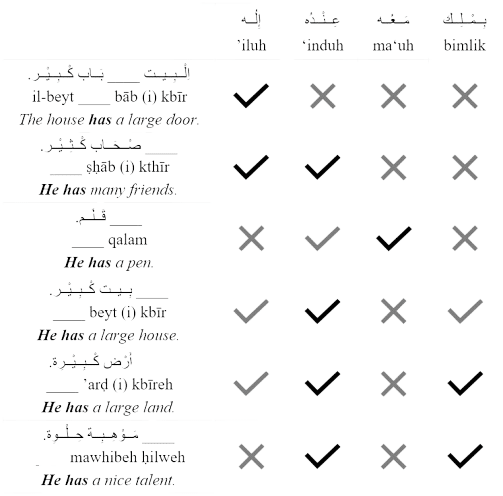
Note that the preposition عِــنْــد (‘ind) is valid in most cases, except when referring to inherent object properties or inalienable possession. In many of the examples above, more than one option is acceptable depending on the exact intended meaning and level of formality.
Expressing Possession Using تَــبَــع (taba‘)
In Levantine Arabic, the word تَــبَــع (taba‘) functions as a possessive particle meaning ‘belonging to’ or ‘pertaining to.’ It has three forms: singular masculine, singular feminine, and plural.
| Sing. Masculine | Sing. Feminine | Plural |
| تَــبَــع taba‘ | تَــبَــعِــةْ taba‘et | تَــبَــعُــوْن taba‘ūn |
Here are some examples:
| .الِــكْــتَــاب تَــبَــع خَــالِــد مَــعِــيْ li-ktāb taba‘ khālid ma‘i The book belonging to Khaled (is) with me. |
| .اِلــسَّــيَّــارَة تَــبَــعِــةْ خَــالِــد سَــرِيْــعَــة is-sayyārah taba‘et khālid sarī‘ah The car belonging to Khaled (is) fast. |
| .هَــذُول اِلْــكُــتُــب تَــبَــعُــوْن خَــالِــد hadhowl il-kutub taba‘ūn khālid These books (are) belonging to Khaled. |
Another way to express the same meaning is through genitive constructions, which will be discussed in Lesson 5 of this level.
Each of the possessive articles تَــبَــع (taba‘), تَــبَــعِــة (taba‘et), and تَــبَــعُــوْن (taba‘ūn) can be suffixed by an attached pronoun referring to the possessor. For example, the possessive article تَــبَــع (taba‘) is suffixed by attached pronouns as follows:
| Singular | Plural | |
| 1st person (m/f) | تَــبَــعِــيْ taba‘i | تَــبَــعْــنَــا taba‘na |
| 2nd person masculine | تَــبَــعَــك taba‘ak | تَــبَــعْــكُــم taba‘kum |
| 2nd person feminine | تَــبَــعِــك taba‘ik | تَــبَــعْــكِــن taba‘kin |
| 3rd person masculine | تَــبَــعُــه taba‘uh | تَــبَــعْــهُــم taba‘hum |
| 3rd person feminine | تَــبَــعْــهَــا taba‘ha | تَــبَــعْــهِــن taba‘hin |
In many cases, the possessive articles تَــبَــع (taba‘), تَــبَــعِــة (taba‘et), and تَــبَــعُــوْن (taba‘ūn) can replace the standard attached pronoun construction. This is common in Levantine Arabic when emphasizing the possessed object.
| كْــتَــابِــيْ = الِــكْــتَــاب تَــبَــعِــيْ ktābi = li-ktāb taba‘i my book = the book belonging to me |
| كُــتُــبُـــه = اِلْــكُــتُــب تَــبَــعُــوْنُــه kutubuh = il-kutub taba‘ūnuh his books = the books belonging to him. |
| قَــرْيِــتْــنَــا = اِلْــقَــرْيِــة تَــبَــعِــتْــنَــا qaryetna = il-qaryeh taba‘etna our village = the village belonging to us |
Back to: Expressing Desire – “To Want”
Other lessons in Level III:
Level III – Intermediate I (B1)
2. Expressing Desire – “To Want”