




In Arabic, الـزَّمَـن المُـضـارِع (az-zaman al-muḍāri‘) ‘the present tense’ primarily refers to actions in the present. This tense is also referred to sometimes as the imperfect tense.
The present tense is expressed in two moods: indicative and subjunctive. We will focus here on the indicative mood, which is used in most cases. We will cover the few cases in which the subjunctive mood is required in the lessons to come.
Basic Forms of Triliteral Present Verbs
The base forms of the triliteral present tense verb are as follows:
| I-A بِــفْــعَــل (bif ‘al) | I-B بِــفْــعِــل (bif ‘il) | I-C بُــفْــعُــل (buf ‘ul) |
| بِــشْــرَب (bish rab) he drinks | بِــكْــسِــر (bik sir) he breaks | بُــكْــتُــب (buk tub) he writes |
| بِــكْــبَــر (bik bar) he grows bigger | بِــنْــزِل (bin zil) he went down | بُـــدْرُس (bud rus) he studies |
The primary distinction among the three base forms lies in the short vowel that marks the middle radical. In Form I-C, the prefix بُــ (bu-) is used to maintain vowel harmony with the following syllable, a feature that is largely absent in North Levantine (Syrian and Lebanese) dialects.
Past verbs of Form I-B, i.e., فِــعِــل (fi‘il), typically appear as Form I-A in the present tense, i.e., بِــفْــعَــل (bif‘al). For example, the past verb شِـــرِب (shirib) ‘he drank’ follows Form I-B, whereas the present verb بِــشْــرَب (bishrab) ‘he drinks’ follows Form I-A.
On the other hand, past verbs of Form I-A, i.e., فَــعَــل (fa‘al), may correspond to any of the three present base forms, i.e., I-A, I-B, or I-C.
| Past Verb | Present Verb | |||
| Form I-B | شِـــرِب shirib he drank | ==> | بِــشْــرَب bishrab he drinks | Form I-A |
| Form I-A | بَــعَــث ba‘ath he sent | ==> | بِــبْــعَــث bib‘ath he sends | Form I-A |
| Form I-A | كَــسَــر kasar he broke | ==> | بِــكْــسِــر biksir he breaks | Form I-B |
| Form I-A | كَــتَــب katab he wrote | ==> | بُــكْــتُــب buktub he writes | Form I-C |
Present-tense verb conjugation varies by gender and number. In the following table, “x” is set based on the three possible vowels that mark the middle radical in the base forms.
To conjugate a verb in the present indicative tense, the appropriate prefix and suffix are added to the stem ــفْـعـلـ (-f‘xl-).
| Singular | Plural | |
| 1st person (m/f) | أَنَـا بَــفْــعــل ’ana baf‘xl I do | إِحْــنَـا مْــنــفْــعــل ’iḥna mnxf‘xl We do |
| 2nd person masculine | إِنْــتَ بْــتــفْــعــل ’inta btxf‘xl You do | إِنْــتُــوْ بْــتــفْـعـلُــوْ ’intu btxf‘xlu You (all) do |
| 2nd person feminine | إِنْــتِ بْــتــفْــعــلِــي ’inti btxf‘xli You do | إنْــتِــنْ بْــتــفْــعــلِـــن ’intin btxf‘xlin You (all) do |
| 3rd person masculine | هُـــوِّ بــفْــعــل huwwe bxf‘xl He does | هُـــمِّ بــفْــعــلُــوْ humme bxf‘xlu They do |
| 3rd person feminine | هِـــيِّ بْــتــفْــعــل hiyye btxf‘xl She does | هِـــنِّ بــفْــعــلِـــن hinni bxf‘xlin They do |
Here are some examples in context:
| .بَــكْــتُــب رِسَــالِــة لَــصَــاحْــبِــيْ baktub risāleh la-ṣāḥbi I write a letter to my friend. | .إِحْــنَــا مْــنِــشْــرَب عَــصِــيْــر ’iḥna mnishrab ‘aṣīr We drink juice. |
| .أَحْــمَــد بِــفْــتَــح اِلْــبَــاب ’aḥmad biftaḥ il-bāb Ahmad opens the door. | .اِلْاَوْلَاد بِــكْــبَــرُوْ بْــسُــرْعَــة il-awlād bikbaru b-sur‘ah The boys grow up quickly. |
Note that the detached personal pronoun may be omitted, since the verb conjugation ending often suffices to indicate the subject.
When describing non-human beings—such as animals, plants, objects, or concepts—in the plural, we use either the feminine singular or the plural form.
| .بْــتِــكْــثَــر/بِــكْــثَــرُوْ اِلْــمَــشَــاكِــل btikthar/biktharu il-mashākil The problems increase. | .اِلْــبِــسَــس بْــتِــشْــرَب/ بِــشْــرَبُــوْ اِلْــمَــيِّــة il-bisas btishrab/bishrabu il-mayyeh The cats drink the water. |
Depending on the dialect variant, some Palestinians make the distinction between genders in plural and use feminine forms specifically for all-female groups, whereas many others use the masculine pronoun to refer to both male and female groups.
| .اِلْاَوْلَاد بِــكْــبَــرُوْ بْــسُــرْعَــة il-awlād bikbaru b-sur‘ah The boys grow up quickly. | .اِلْــبَــنَــات بِــكْــبَــرُوْ/بِــكْــبَــرِنْ بْــسُــرْعَـة il-banāt bikbaru/bikbarin b-sur‘ah The girls grow up quickly. |
Derived Triliteral Present Verb Forms
In addition to the base verb forms, derived forms modify the triliteral root in various ways, such as doubling a consonant, lengthening a vowel, or inserting a prefix, infix, or suffix.
The ten most common present verb forms in Palestinian-Jordanian Arabic are:
| I | II | III | IV | V |
| بــفْــعــل bxf ‘xl | بِــفَــعِّــل bifa‘‘il | بِــفَــاعِــل bifā‘il | بِــفْــعِــل bif ‘il | بِــتْــفَــعَّــل bitfa‘‘al |
| VI | VII | VIII | IX | X |
| بِــتْــفَــاعَــل bitfā‘al | بِــنْــفِــعِــل binfi‘il | بِــفْــتِــعِــل bifti‘il | بِــفْــعَــلّ bif ‘all | بِــسْــتَــفْــعِــل bistaf ‘il |
Form Legend:
I. Base Form
II. Intensive, Causative, or Transitive
III. One-sided Attempts
IV. Causative
V. Reflexive of II
VI. Reflexive of III
VII. Passive of I
VIII. Reflexive of I
IX. Colors & Deformities
X. Causative Reflexive
Each present verb form is derived from its corresponding past verb form. For example, the present form of the past verb فَــاعَــل (fā‘al) is بِــفَــاعِــل (bifā‘il), both following Form III.
All these derived forms adhere to the same verb conjugation rules discussed earlier.
Let us consider some examples:
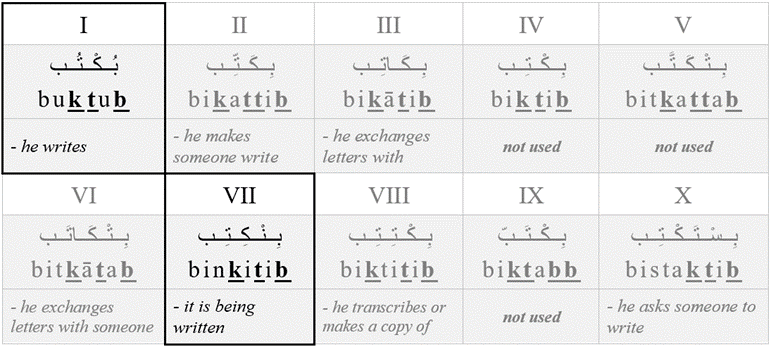
- Verb forms derived from the triliteral root ك – ت – ب (k-t-b).
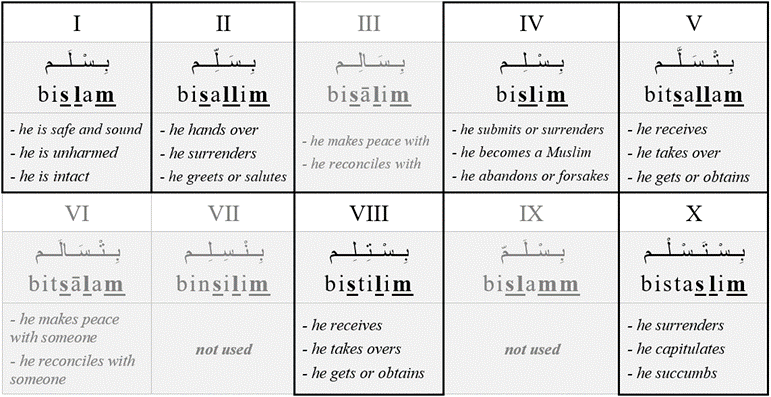
- Verb forms derived from the triliteral root س – ل – م (s-l-m).
- Verb forms derived from the triliteral root ع – ل – م (‘-l-m).
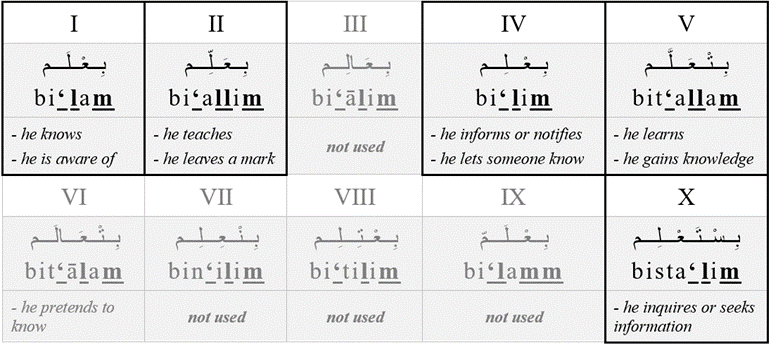
Note that only the highlighted verb forms are frequently used in everyday Palestinian-Jordanian Arabic.
Quadri-literal Present Verbs
Most verbs in Arabic have tri-consonantal roots, while only a few verbs have quadri-consonantal roots. We will examine the shortest past verb form for quadri-consonantal root verbs, بِــفَــعْــلِــل (bifa‘lil), as well as the most common derived form, بِــتْــفَــعْــلَــل (bitfa‘lal).
Here are some examples:
| بِــفَــعْــلِــل (bifa‘lil) | بِــتْــفَــعْــلَــل (bitfa‘lal) |
| بِــتَــرْجِــم (bitarjim) he translates | بِــتْــتَــرْجَــم (bittarjam) it is (being) translated |
| بِــدَبْــلِــج (bidablij) he dubs (e.g., a film) | بِــتْــدَبْــلَــج (bitdablaj) it is (being) dubbed (e.g., a film) |
| بِــبَــرْمِــج (bibarmij) he programs | بِــتْــبَــرْمَــج (bitbarmaj) it is (being) programmed |
| بِــزَلْـــزِل (bizalzil) he shakes violently | بِــتْــزَلْــزَل (bitzalzal) it is (being) shaken violently |
Quadri-literal root verbs and their derived forms follow the same verb conjugation rules discussed earlier.
| .اِلْــوَرَقَــة بْــتِــتْــرْجَــم بْــسُــرْعَــة il-waraqah (i) btittarjam b-sur‘ah The paper is translated quickly. |
| .أَخُـــوْي وصَــاحْــبُــه بِــبَــرْمِــجُــوْ الــتِّــلْــفِــزْيُــون ’akhūy u- ṣāḥbuh bibarmiju -t-tilfizyown My brother and his friend program the television. |
Next: Expressing Desire – “To Want”
Other lessons in Level III:
Level III – Intermediate I (B1)
2. Expressing Desire – “To Want”