



French 4.1. Degrees of Comparison

Level I 1. Alphabet & Pronunciation 1.1. Vowels 1.2. Consonants 1.3. Silent Final Consonants 1.4. Liaison 1.5. Syllable Stress 2. Similarities to English 2.1. Negation 2.2. Punctuation & Written Accents 3. Gender & Plural 5. Subject Personal Pronouns 4. Cardinal Numbers 6. Present Indicative Tense I 7. The Articles 8. Interrogative Pronouns & Adjectives Level II 1. Prepositions 2. Present Indicative Tense II – Irregular Verbs 3. Possessive Adjectives & Pronouns 4. Demonstrative Pronouns & Adjectives 5. Object Personal Pronouns 6. Relative Pronouns 7. Ordinal Numbers I 8. Basic Phrases 9. Times & Seasons Level III 1. Compound Past 2. The Verb “To Know” 3. Indefinite Adjectives & Pronouns 4. Conjunctions 5. Simple Future Tense 6. Telling Time & Describing Weather 7. Present Participle & Gerund 8. Adverbs 8.1. Other Adverbs & Adverbial Phrases 9. Directions Level IV 1. Degrees of Comparison: Comparatives & Superlatives 2. Partitives 3. Reflexive Pronouns & Verbs 4. Expressions Using “Avoir” & “Faire” 5. Present Subjunctive Tense I 6. Impersonal Verbs & Expressions 7. Future Perfect Tense 8. Interjections Level V 1. The Pronouns “Y” & “En” 2. Imperative Mood & Giving Commands 3. The Conditional Tenses 4. Present Subjunctive Tense II 5. Perfect Subjunctive Tense 6. Imperfect Indicative Tense 7. Time Expressions: “En train de,” “Venir de,” “Depuis,” & “Ça fait” Level VI 1. The Past Infinitive 2. Simple Past Tense 3. Pluperfect Indicative Tense 4. Idiomatic Pronominal Verbs 5. Prepositional Verbs 6. Passive Voice 7. Diminutives & Augmentatives
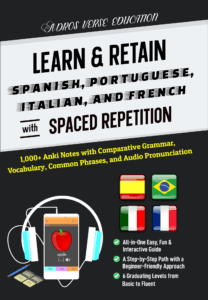
learn-romance-languages-at-the same-time-book-cover

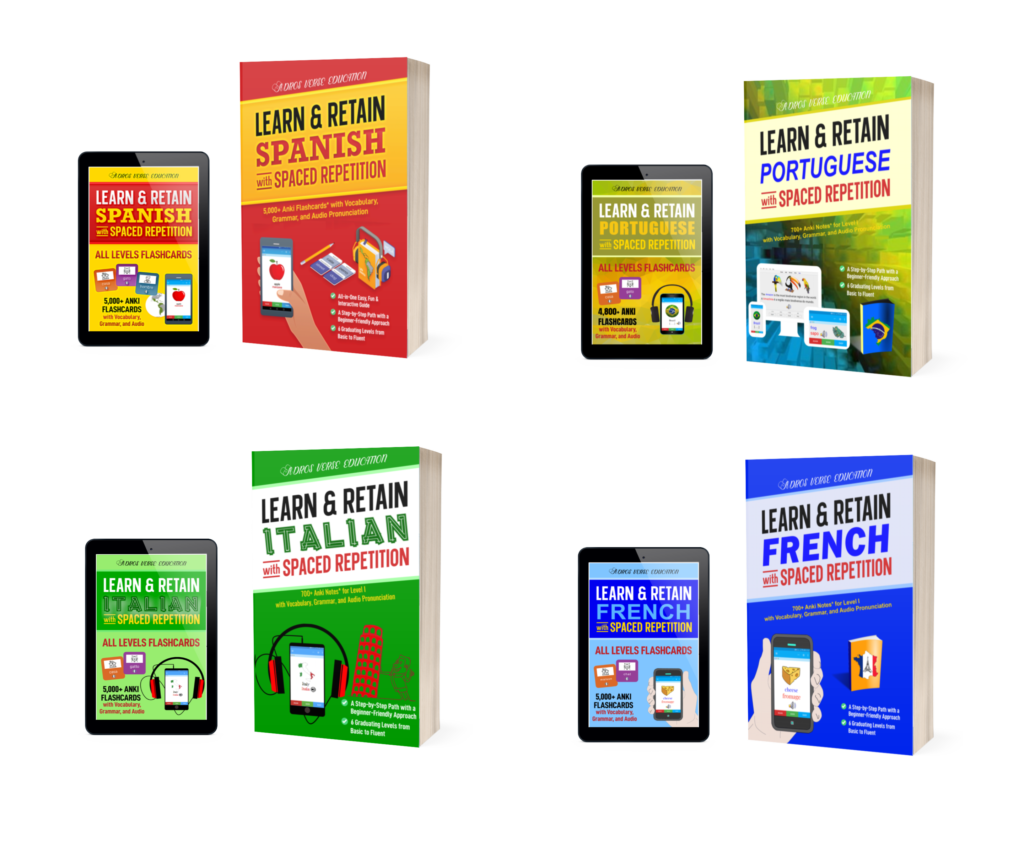
Learn & Retain SP, PT, IT, & FR with Spaced Repetition

600+ Anki Notes for Level I with Vocabulary, Grammar, & Audio Pronunciation

Buy Now
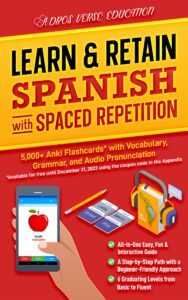
book-cover-learn-and-retain-spanish-with-spaced-repetition-5000-anki-notes-flashcards

Learn & Retain Spanish with Spaced Repetition

5,000+ Anki Notes for Level I with Vocabulary, Grammar, & Audio Pronunciation

Buy Now
italiano-book-cover

Learn & Retain Italian with Spaced Repetition

700+ Anki Notes for Level I with Vocabulary, Grammar, & Audio Pronunciation

Buy Now
ebook-cover-french-speaced-repetition

Learn & Retain French with Spaced Repetition

700+ Anki Notes for Level I with Vocabulary, Grammar, & Audio Pronunciation

Buy Now

In this lesson, we will examine different degrees of comparison of nouns in French, indicating their equality, inequality, or the extreme degree of an adjective.

We will study the comparison of equality, the comparison of inequality, and superlatives.

Comparatives of Equality

The most common expressions in this category are:

1. aussi + (adjective/adverb) + queas (adj./adv.) as …

Cette voiture est aussi chère qu’une maison.This car is as expensive as a house.
Elle est aussi grande que sa sœur.She is as tall as her sister.
Il parle aussi clairement qu’un professeur.He speaks as clearly as a teacher.

2. autant de + (noun) + que as much/many (noun) as …

Il a autant d’argent qu’un millionnaire.He has as much money as amillionaire.
Il y a autant de monde ici qu’à Londres.There are as many people here as in London.

Comparatives of Inequality

The following formula is used to express inequality when comparing two adjectives, adverbs, or nouns:

plus/moins (de)… que …                               more/lessthan

For example:

Elle est plus grande que sa sœur.       She is taller than her sister.
Il parle plus clairement qu’un professeur.He speaks more clearly than a teacher.
Il a plus d’argent que le président.He has more money than the president.
Nous sommes moins riches que nos parents.We are less rich than our parents.
Il parle moins clairement qu’un professeur.He speaks less clearly than a teacher.
Il a moins de patience que mon frère.He has less patience than my brother.

Notice that “de” is added only when comparing nouns, but not when comparing adjectives or adverbs.

It is also possible to use the above structure to compare an adjective to another adjective of the same noun. For example:

Son discours est plus émotif que précis.His speech is more emotional than it is accurate.
Ils sont plus professionnels qu’expérimentés.They are more professional than they are experienced.

Irregular Forms

Only few adjectives and adverbs have irregular forms, or both regular and irregular forms. Here are the most common irregular adjectives (in the singular masculine form) and adverbs:

bongoodmeilleurbetter
mauvaisbadpire (or) plus mauvaisworse
petitlittlemoinsless
bienwellmieuxbetter
malbadlypire (or) plus mal worse
peu littlemoinsless

Superlatives

There are two ways to express the large or extreme degrees of an adjective.

1. Relative Superlatives

le/la/les + plus/moins + (adjective)the + most/least + (adjective)

Here are some examples:

Elle est la plus intelligente de sa classe.She is the most intelligent in her class.
Nous sommes les moins touchés par la crise.We are the least affected by the crisis.
C’est le sujet le plus important du pays.This is the most important topic in the country.
Il est le politicien le moins corrompu du parlement.He is the least corrupt politician in the parliament.
Ce sont les femmes les plus courageuses que j’ai jamais vues.They are the most courageous women I have ever seen.

Irregular Forms

The following adjectives (listed here in their singular masculine form) and adverbs have irregular forms as relative superlatives:

bongoodle meilleurbest
mauvaisbadle pire (or) le plus mauvaisworst
petitlittlele moindreleast
bienwellle mieuxbest
malbadlyle pire (or) le plus malworst
peu littlele moinsleast

2. Absolute Superlatives

One can express an absolute superlative by simply preceding the adjective with an adverb such as “très” (very) or “extrêmement” (extremely). For example:

Ce stade est très froid.This stadium is very cold.
Le café est extrêmement chaud.The coffee is extremely hot.

Quiz: Degrees of Comparison in French

French: Degrees of Comparison

1 / 10

1. That house is bigger than this one.

FR: Cette maison est que celle-ci.

Accented letters (if needed):

ç é à è ù â ê
î ô û ë ï ü

2 / 10

2. The absolute superlative in French can be formed by using adverbs like “très” or “extrêmement.” For example, the absolute superlative of “bon” is:

FR:

Accented letters (if needed):

ç é à è ù â ê
î ô û ë ï ü

3 / 10

3. This is the best book I have read.

FR: C’est le livre que j’ai lu.

Accented letters (if needed):

ç é à è ù â ê
î ô û ë ï ü

4 / 10

4. bon (good)

FR: (better)

Accented letters (if needed):

ç é à è ù â ê
î ô û ë ï ü

5 / 10

5. This car is smaller than that one.

FR: Cette voiture est que celle-là.

Accented letters (if needed):

ç é à è ù â ê
î ô û ë ï ü

6 / 10

6. The coffee is extremely hot.

FR: Le café est _____ chaud.

7 / 10

7. mauvais (bad)

FR: (worse)

Accented letters (if needed):

ç é à è ù â ê
î ô û ë ï ü

8 / 10

8. She is less tall than him.

FR: Elle est grande que lui.

Accented letters (if needed):

ç é à è ù â ê
î ô û ë ï ü

9 / 10

9. This cake is very good.

FR: Ce gâteau est bon.

Accented letters (if needed):

ç é à è ù â ê
î ô û ë ï ü

10 / 10

10. He is the most intelligent in the class.

FR: Il est le intelligent de la classe.

Accented letters (if needed):

ç é à è ù â ê
î ô û ë ï ü

Your score is

The average score is 0%

0%

Thank you for taking the quiz!

Next: Partitives

Back to: French Lessons

Other lessons in Level IV:

Adros Verse Education
Privacy Overview

This website uses cookies so that we can provide you with the best user experience possible. Cookie information is stored in your browser and performs functions such as recognising you when you return to our website and helping our team to understand which sections of the website you find most interesting and useful.